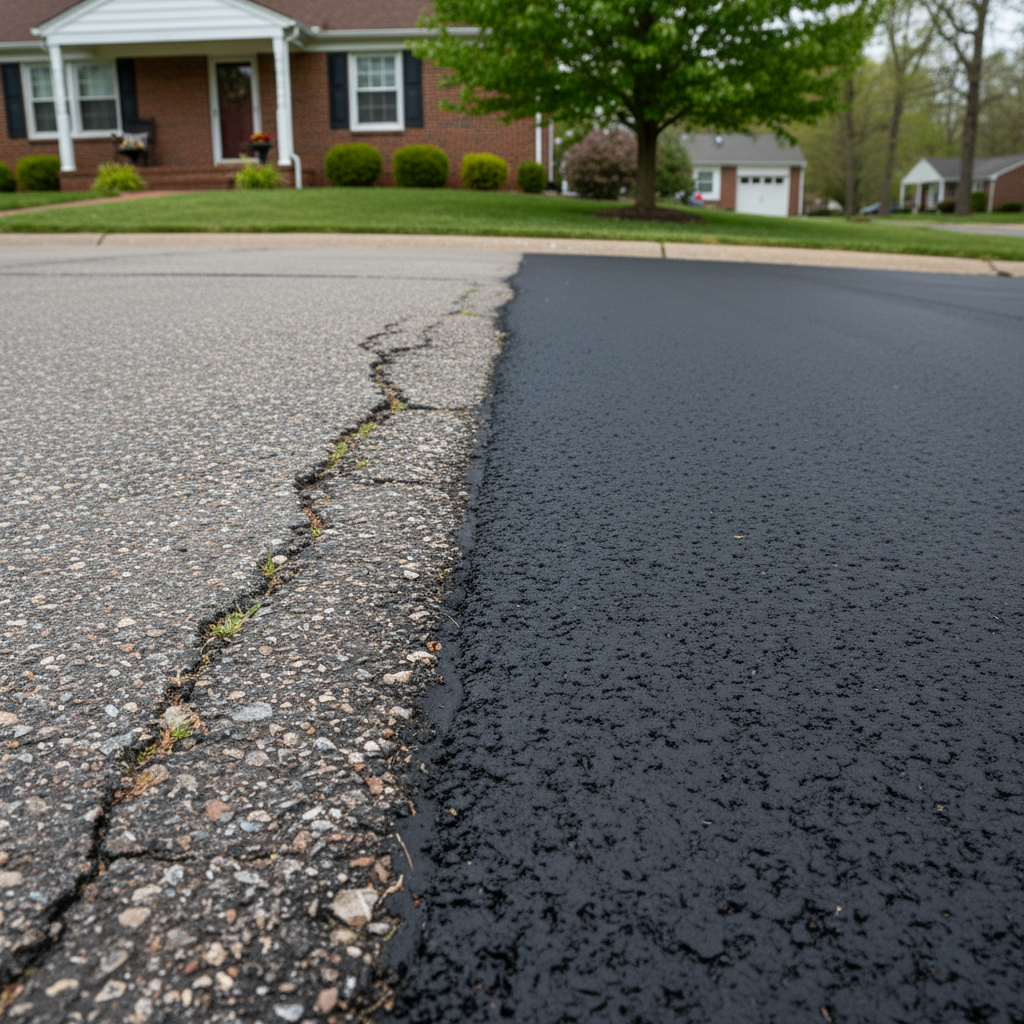
Your asphalt driveway's seen better days, huh? Maybe it's got a few alligator cracks, some potholes that are getting deeper, or just looks tired. When it's time to fix it, homeowners often wonder about the best way to go. You've basically got two main routes for patching: a 'cut and replace' job or just laying an 'overlay' right on top. As a local contractor, I've done both countless times, and I'll tell you straight up what you need to know about each.
Cut & Replace: The Gold Standard
This is what I usually recommend for anything more than a small, isolated crack. With cut and replace, we're not just covering up the problem; we're getting rid of it. Here's how it works: we precisely cut out the damaged section of asphalt, all the way down to the base. Then, we remove all that old, broken material. We'll inspect the sub-base underneath – that's the gravel layer that supports everything – and if it's compromised, we'll fix that too. After that, we clean the area, apply a tack coat (that's like glue for asphalt), and then lay down fresh, hot asphalt, compacting it thoroughly to match the surrounding pavement.
Durability: This is where cut and replace shines. Because you're dealing with the root cause and putting in new, properly compacted material, these patches are incredibly durable. They're designed to last for years, often as long as the rest of your driveway if done right. You won't see it sinking or cracking again in the same spot anytime soon.
Cost: Yeah, it's generally more expensive upfront than an overlay. You're paying for more labor, more material removal, and more new material. But think of it as an investment. You're buying peace of mind and a longer-lasting repair.
Maintenance: Once it's in, it's pretty much like the rest of your driveway. Keep it sealed every few years, and you're good.
Appearance: A well-done cut and replace patch blends in much better than a surface-level patch. It's a clean, defined edge, and while you'll always see the seam, it's a neat one. It looks professional.
Asphalt Overlay: The Quick Fix
An overlay, sometimes called a skin patch or surface patch, is exactly what it sounds like: we clean the area, maybe fill some deeper cracks, and then just lay a new layer of asphalt right over the existing damaged spot. It's quicker, less invasive, and often cheaper initially.
Durability: This is the big downside. An overlay is a temporary fix. It's like putting a band-aid on a broken bone. The underlying problem – whether it's a weak base, extensive cracking, or water damage – is still there. Overlays are prone to reflective cracking, meaning the cracks from the old asphalt will eventually show through the new layer. They can also delaminate or peel off, especially with the freeze-thaw cycles we get here in Philadelphia. You know how our winters can be, with temperatures swinging wildly. That's brutal on a thin, surface-level patch.
Cost: Definitely cheaper upfront. Less labor, less material. If you're selling your house next month and just need to make it look decent for a showing, an overlay might be an option. But for long-term homeownership, you'll likely pay more in repeated repairs down the line.
Maintenance: You'll be maintaining it more often because it's not as robust. You might find yourself patching the patch within a year or two.
Appearance: It can look okay initially, but often you'll see a hump or a noticeable difference in texture and color. As it starts to fail, it looks pretty messy, with new cracks forming and edges lifting.
My Recommendation for Philly Homeowners
Look, I'm not going to sugarcoat it. For most homeowners in Philadelphia, especially with our clay-heavy soils in some areas and those harsh winters, a cut and replace is almost always the better choice for significant damage. It addresses the problem properly and gives you a repair that actually lasts. You're not just kicking the can down the road.
When would I consider an overlay? Maybe for a very shallow, minor surface imperfection in an area with absolutely no underlying issues, or if your entire driveway is reaching the end of its life and you're just trying to squeeze another year out of it before a full replacement. But even then, I'd usually lean towards a more permanent solution.
You want a repair that stands up to the traffic, the rain, the snow, and those brutal temperature swings. A proper cut and replace patch from a company like Western Asphalt Company means you won't be calling us back for the same issue in a year. You'll get a solid, lasting fix that you won't have to worry about.
Don't just go for the cheapest option; go for the one that makes sense for the long haul. Your driveway is an investment, treat it that way.