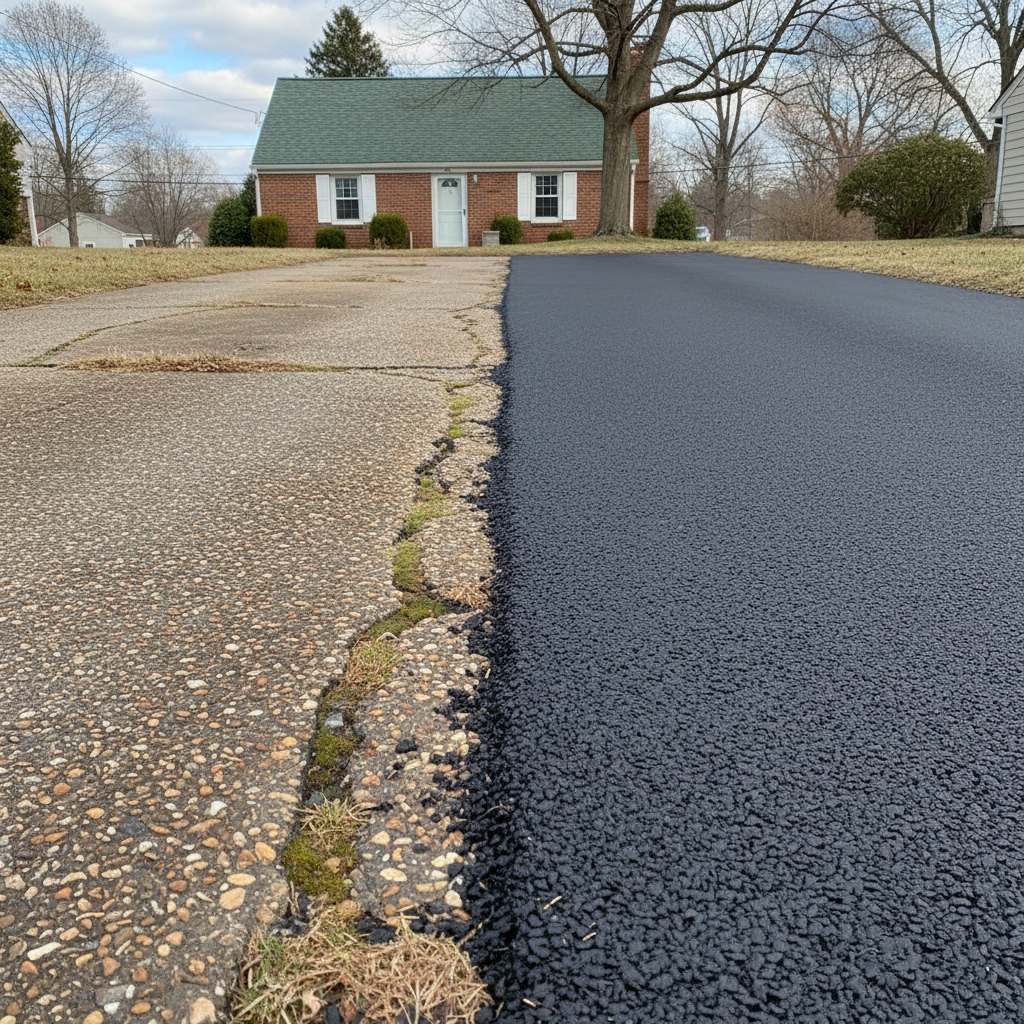
So, you've got a commercial lot, a big private road, or maybe a really long driveway that needs some serious asphalt work. You're probably hearing terms like 'full depth paving' and 'mill and overlay' thrown around. What's the real difference, and which one's right for your property here in Philadelphia?
I've been laying asphalt around this city for years, from South Philly row homes to big industrial parks out in the Northeast. I've seen what works and what doesn't, especially with our crazy weather and diverse soil conditions. Let's get into it.
Full Depth Asphalt Paving: The Ground Up Approach
When we talk about full depth asphalt, we're talking about starting from scratch. This means we dig everything down to the subgrade – that's the natural soil underneath. Then, we compact that subgrade, lay down a new aggregate base (think crushed stone), and finally, apply multiple layers of asphalt directly on top of that base. Each layer gets compacted, slowly building up to the final surface.
When Full Depth Makes Sense:
- New Construction: If you're putting in a brand new parking lot or road where nothing was before, full depth is the only way to go. You're literally building from the ground up.
- Seriously Damaged Pavement: Got an old lot that's completely shot? We're talking widespread alligator cracking, massive potholes, significant heaving, or drainage issues that are causing structural failure. If the base itself is compromised, you can't just put a new skin on it. You need to fix the bones.
- Changing Grades or Drainage: If you need to significantly change the slope of your property for better water runoff, or if the existing base is causing pooling, full depth lets us re-establish proper grading from scratch. This is crucial in places like the low-lying areas near the Delaware River, where good drainage prevents a lot of headaches.
Pros of Full Depth Paving:
- Maximum Durability: You get a completely new, super strong pavement structure designed to last for decades.
- Longest Lifespan: With proper maintenance, a full depth asphalt pavement can easily last 20-30 years, sometimes even more.
- Superior Performance: It fixes underlying issues, ensuring a stable, smooth surface right from the start.
Cons of Full Depth Paving:
- Highest Cost: This is the most expensive option because of all the excavation, material, and labor involved.
- Longer Project Time: More steps mean more time on site, naturally.
- More Disruptive: Tearing up the old surface and digging down is a bigger operation, no doubt.
Asphalt Mill and Overlay: The Resurfacing Solution
Mill and overlay, sometimes called 'grind and pave,' is a different animal. Here, we're not digging everything up. Instead, a milling machine removes a specific depth of the existing asphalt surface – usually 1.5 to 3 inches. We then clean that milled surface and pave new asphalt directly on top. It's like giving your old pavement a brand new, thick skin.
When Mill and Overlay Makes Sense:
- Structurally Sound Base: This is key. Mill and overlay is only a good option if the underlying aggregate base is still in decent shape. The surface might be cracked or worn, but the foundation needs to be solid.
- Moderate Deterioration: If your parking lot has a lot of surface cracks, minor potholes, or general wear and tear, but isn't completely falling apart, an overlay can give it a fresh start.
- Maintaining Grade & Drainage: Milling removes material, so when we put new asphalt down, we're not raising the overall height of the pavement. This is important for keeping existing curb heights, drainage patterns, and clearances for things like garage doors or loading docks. This is often a big concern for businesses in older parts of Philly where every inch matters.
Pros of Mill and Overlay:
- More Cost-Effective: It's a lot less expensive than full depth paving because there's less digging and material needed.
- Faster Project Completion: Milling and paving is a quicker process than a full tear-out and rebuild.
- Less Disruptive: The site is usually accessible sooner, which is a big deal for businesses.
- Recycling Benefits: The milled asphalt can often be recycled, which is good for the environment and can sometimes reduce material costs.
Cons of Mill and Overlay:
- Shorter Lifespan: While still durable, an overlay typically lasts 10-15 years, less than a full depth job.
- Doesn't Fix Underlying Issues: If your base is failing, an overlay is just a temporary band-aid. Those problems will eventually show through the new surface.
- Limited Grade Changes: You can make minor adjustments, but not major overhauls to the grade.
The Western Asphalt Company Recommendation for Philly
For most commercial properties or large residential areas in Philadelphia, if your existing asphalt pavement is showing significant surface wear but doesn't have major structural failures like deep, widespread alligator cracking or severe heaving, a mill and overlay is usually your best bet. It's a cost-effective, efficient way to get a beautiful, durable new surface that will last you well over a decade.
However, if your pavement is truly falling apart, if you're building new, or if you have serious drainage problems that stem from a bad base, then you absolutely need to invest in full depth paving. It's more expensive upfront, but it's the only way to ensure a long-lasting, problem-free solution.
The key is a proper assessment. Before you decide, have a professional come out and take a look. We'll check the base, look at the drainage, and give you an honest opinion on what's going to serve your property best in the long run. Don't guess; get the facts from someone who knows Philly asphalt.