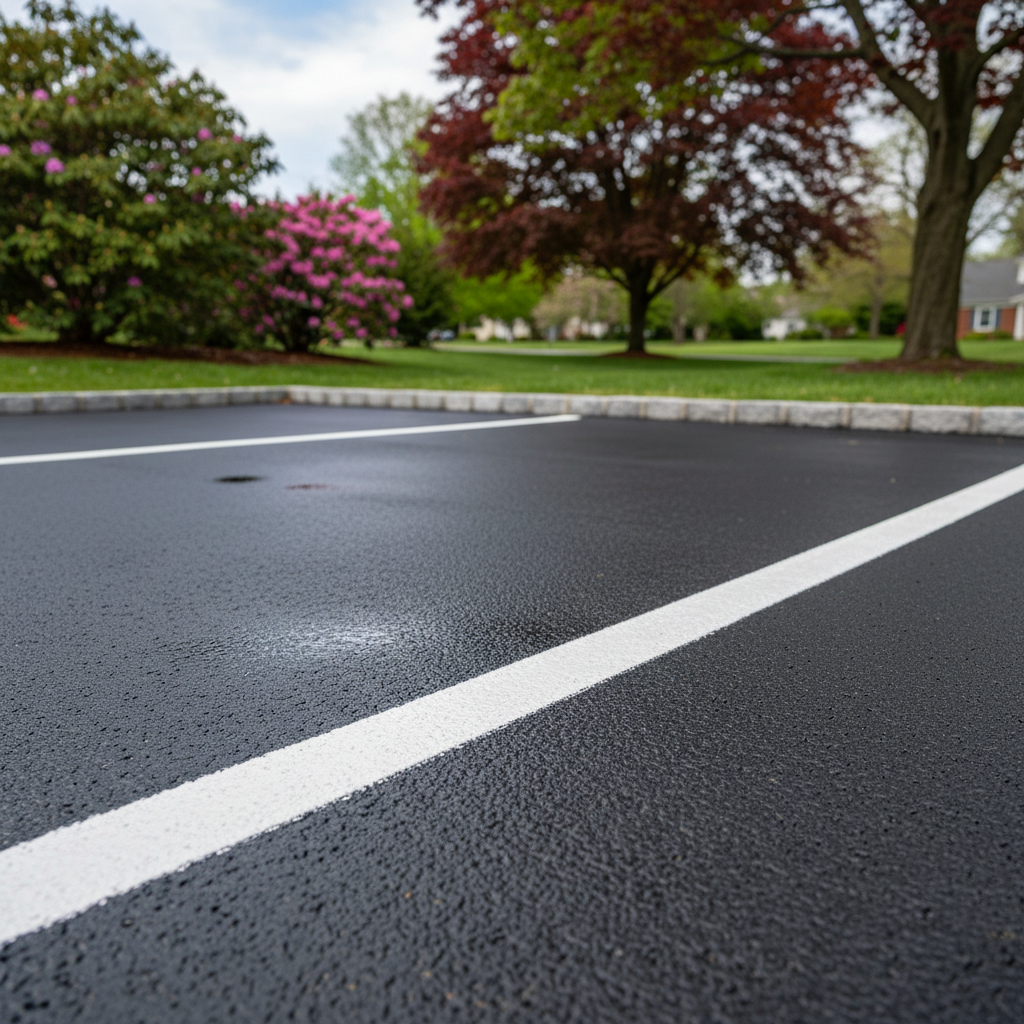
Alright, let's talk striping. You've got a parking lot, maybe a small business, a church, or even a multi-unit residential property here in Philly, and those lines are looking a little rough. Or maybe you're just trying to figure out what the heck goes into making a parking lot functional and safe. I get a lot of questions about this, so I figured I'd put together some straight answers. No fluff, just what you need to know from someone who's been doing this work around here for years.
How often should I get my asphalt parking lot re-striped?
This is probably the most common question I hear. There's no one-size-fits-all answer, but generally, for a commercial parking lot with moderate to heavy traffic, you're looking at re-striping every 18 to 24 months. For lighter traffic areas, like a small apartment complex or a less-busy retail spot, you might stretch it to 2-3 years. What makes the difference? A few things:
- Traffic Volume: More cars mean more wear and tear on those painted lines. It's simple physics.
- Weather: Philly weather can be brutal. Hot summers, freezing winters, and all that rain and snow take a toll. The freeze-thaw cycles we get, especially after a good snowstorm on a street like Broad Street, really beat up pavement and paint.
- Type of Paint: We'll get into this more, but some paints hold up better than others.
- Surface Condition: If your asphalt is old, cracked, or crumbling, the paint won't adhere as well or last as long. You might need some repairs before striping.
Ultimately, you want to get it done before the lines become so faded that people are guessing where to park or, worse, driving unsafely.
What kind of paint do you use for pavement markings?
There are a few main types, and the choice depends on the application, budget, and desired longevity. Here's what we typically use or recommend:
- Water-Based Acrylic Traffic Paint: This is the most common. It's environmentally friendly, dries pretty quickly, and is cost-effective. It's great for most parking lots and lasts a good couple of years. It's what you'll see on most commercial lots around Fishtown or South Philly.
- Thermoplastic: This isn't really paint; it's a plastic material applied hot. It's incredibly durable and long-lasting, often used for high-traffic areas like major roadways or crosswalks. It's more expensive and takes special equipment to apply, so you won't typically see it on a small business parking lot.
- Epoxy-Based Traffic Paint: Offers excellent durability and chemical resistance. It's a step up from water-based in terms of longevity but also costs more.
We'll always discuss the best option for your specific needs when we come out for an estimate. For most parking lots, the water-based acrylic with glass beads is the standard and works great.
Do you add glass beads to the paint? Why?
Absolutely, yes! For most striping jobs, especially in parking lots, we add tiny glass beads to the paint. Why? For reflectivity. When headlights hit those lines at night, the glass beads reflect the light back, making the lines much more visible. This is a huge safety factor, helping drivers see parking stalls, arrows, and accessible parking spots clearly, even in low light or bad weather. It's a small detail that makes a big difference for safety.
How long does it take for the paint to dry? Can I use my lot right away?
This is crucial for minimizing disruption to your business or residents. Most water-based acrylic traffic paints are 'tack-free' in about 15-30 minutes, meaning you can walk on them without tracking. However, for vehicle traffic, you really want to give it at least 1-2 hours, and ideally 4-6 hours for full cure, especially if it's humid or cooler out. We'll always cordon off the area with cones and caution tape to ensure no one drives over the fresh paint too soon. We're pretty good at scheduling these jobs to minimize inconvenience, often doing them early mornings or weekends.
What's involved in the striping process?
It's more than just slapping down some paint. Here's a quick rundown of how Western Asphalt Company typically handles a striping job:
- Site Assessment: First, we'll come out and look at your lot. We'll check the current layout, discuss any changes you want to make (like adding EV charging spots or redesigning traffic flow), and assess the condition of the asphalt.
- Cleaning: We'll sweep and blow off any dirt, debris, or loose gravel. Paint won't stick to a dirty surface.
- Layout and Marking: If it's a new layout or a complete re-stripe where the old lines are gone, we'll measure and chalk out all the lines, arrows, and symbols according to ADA compliance and your specific needs. If we're just re-striping existing lines, we'll follow those.
- Painting: We use specialized striping machines that apply the paint evenly and consistently. We'll do all the parking stalls, accessible parking symbols, fire lanes, arrows, stop bars, and any custom stenciling you need.
- Curing and Cleanup: We'll make sure the area is properly barricaded until the paint is dry, then we'll clean up all our equipment and materials.
Can you help with ADA compliance for accessible parking spaces?
Absolutely, that's a big part of what we do. ADA compliance isn't just about having a few accessible spots; it's about making sure they're the right size, in the right location, with proper access aisles, signage, and the correct blue and white markings. The rules can be a bit complex, and they do change sometimes, so you need someone who stays on top of it. We'll make sure your accessible parking spaces meet all current federal and local regulations, including the proper number of spaces for your lot's size, the correct dimensions, and the required signage. You don't want to get hit with fines because your accessible spots aren't up to code.
My parking lot is really faded, but also has some cracks. Should I sealcoat before striping?
Yes, 100%. If your asphalt is faded and showing cracks, sealcoating is almost always the smart first step before striping. Think of it this way: sealcoating is like putting a fresh, protective layer over your asphalt. It fills in small cracks, protects against UV rays and water damage, and gives you a nice, dark, uniform surface. When you stripe on top of fresh sealcoat, the lines pop more, and the paint adheres much better, meaning it'll last longer. Trying to stripe on old, cracked, unsealed asphalt is like painting on a crumbling wall – it just won't look good or hold up. We often do sealcoating and striping as a package deal because they go hand-in-hand for a long-lasting, professional-looking parking lot.