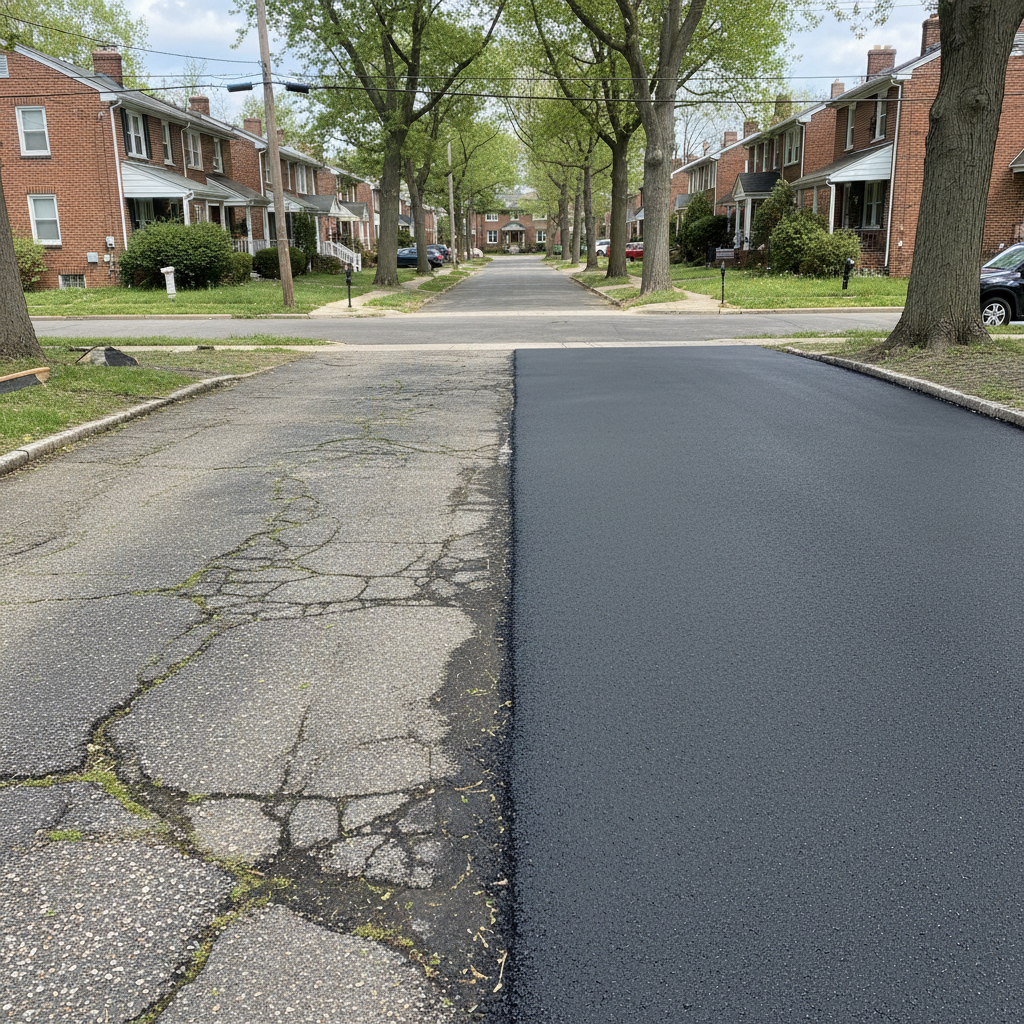
Philly homeowners, we need to talk about driveways. When you are looking to pave or repave, you might hear different terms. It can get confusing. We are going to look at the real differences between Hot Mix Asphalt (HMA) and Warm Mix Asphalt (WMA). You want a driveway that lasts, looks good, and handles the Philadelphia weather. We will help you figure out which one is the right fit for your property in Philadelphia. Western Asphalt Company is here to help.
What is Hot Mix Asphalt (HMA)?
Hot Mix Asphalt, or HMA, is what most people think of for a new road or driveway. It is the traditional method. It is a proven material. Here is how Hot Mix Asphalt works:
- How it is Made: Hot Mix Asphalt is produced at high temperatures. These temperatures are usually between 300°F and 350°F. Aggregates, which are stone, sand, and gravel, are mixed with asphalt cement. The Hot Mix Asphalt is kept hot during transport and during paving.
- Durability: This material is very tough. Hot Mix Asphalt creates a dense, strong surface. It can handle heavy traffic and extreme weather conditions in Philadelphia. A properly installed Hot Mix Asphalt driveway can last 15 to 20 years. Sometimes it can last 20 to 30 years or more with good maintenance.
- Appearance: When Hot Mix Asphalt is laid correctly, it gives that classic, smooth, deep black finish. This looks sharp for any Philadelphia home.
- Maintenance: Like all asphalt, Hot Mix Asphalt needs regular maintenance. This means sealcoating every 2 to 3 years. Sealcoating protects it from our freeze-thaw cycles and UV rays. It also means filling cracks as they appear.
- Cost: Hot Mix Asphalt installations generally have a higher upfront cost. This is compared to some other options. However, they offer a good return on investment because of their longevity. Material costs for Hot Mix Asphalt typically range from $40 to $80 per ton.
- Installation Window: Hot Mix Asphalt needs warm, dry weather for correct installation. The asphalt must stay hot enough to compact properly. So, we are usually looking at late spring through early fall here in Pennsylvania for Hot Mix Asphalt projects.
What is Warm Mix Asphalt (WMA)?
Warm Mix Asphalt is a newer technology. It has been gaining popularity. Warm Mix Asphalt is designed to be a more environmentally friendly option than Hot Mix Asphalt. It does this without sacrificing performance. Here is the information on Warm Mix Asphalt:
- How it is Made: The main difference here is the temperature. Warm Mix Asphalt is produced and laid at much lower temperatures than Hot Mix Asphalt. It can be 30°F to 120°F cooler. This is achieved by adding special additives or using foaming techniques. These techniques reduce the asphalt binder's viscosity. This makes it workable at lower temperatures.
- Durability: This is where Warm Mix Asphalt performs very well. It is designed to have similar or even better performance and durability than Hot Mix Asphalt. The lower temperatures can lead to better compaction. This means a denser, more uniform, and more durable surface. Warm Mix Asphalt is resistant to cracking, rutting, and moisture damage in Philadelphia.
- Appearance: Warm Mix Asphalt looks just like Hot Mix Asphalt once it is laid down. It has the same smooth, black finish you expect for your property in Philadelphia.
- Maintenance: Maintenance requirements for Warm Mix Asphalt are similar to Hot Mix Asphalt. Regular sealcoating and crack filling are important for maximizing its lifespan.
- Cost: Warm Mix Asphalt can offer cost savings. Lower production temperatures mean less fuel is used at the plant. It can also be hauled longer distances without cooling too much. This reduces transportation costs. These savings can sometimes mean lower project costs for you.
- Installation Window: This is a big advantage for us in Philadelphia. Warm Mix Asphalt cools more slowly. This means it can be placed in cooler temperatures. This extends the paving season further into the fall and earlier in the spring. This means less waiting for the perfect weather window for your Warm Mix Asphalt driveway.
The Philadelphia Factor: What Works Best Here?
Our weather in Philadelphia is very challenging. We have hot, humid summers and cold winters. We also have brutal freeze-thaw cycles. These cycles can really damage pavement. Water seeping into cracks, freezing, and expanding is a major cause of driveway damage. This is especially true in older neighborhoods like Manayunk. Steep, shaded driveways in Manayunk can hold snowmelt longer. Western Asphalt Company understands these local conditions.
Both Hot Mix Asphalt and Warm Mix Asphalt are engineered to handle these conditions. This is especially true if they are dense-graded mixes. A good, dense mix is important for resisting moisture infiltration.
Here is our take at Western Asphalt Company:
- For most residential driveways in Philadelphia, you are looking at a compacted asphalt thickness of 2 to 3 inches. This is over a solid 4 to 6-inch gravel or crushed stone base. If you have heavier vehicles, you might want to increase that to 3 inches of asphalt over a 6 to 8-inch base. The base is what carries the load. The asphalt itself does not carry the entire load.
- Hot Mix Asphalt is a tried and true choice for Philadelphia. It is durable and looks great. If installed during the best weather window, usually May through September, it will give you many years of service.
- Warm Mix Asphalt is a fantastic modern alternative. This is especially true for our climate in Philadelphia. The ability to pave in slightly cooler conditions means Western Asphalt Company can sometimes get your project done when traditional Hot Mix Asphalt might be a risk. This extends the paving season. This is a big plus for scheduling and getting your project completed before winter hits Philadelphia. The improved compaction and durability are real benefits for a long-lasting driveway. This driveway will stand up to our local conditions.
At Western Asphalt Company, we have seen firsthand how important a quality installation is. This is true no matter the mix. The best material will not last if the base is not right. It also will not last if it is laid improperly. Both Hot Mix Asphalt and Warm Mix Asphalt are excellent options. However, Western Asphalt Company recommends Warm Mix Asphalt (WMA) for homeowners in Philadelphia. It offers all the benefits of traditional Hot Mix Asphalt. It often has enhanced durability. It also has a more flexible installation window. This is a huge advantage when dealing with our unpredictable weather in Philadelphia. It is a smarter, more sustainable choice. It gives you a tough, good-looking driveway built to last in Philadelphia.