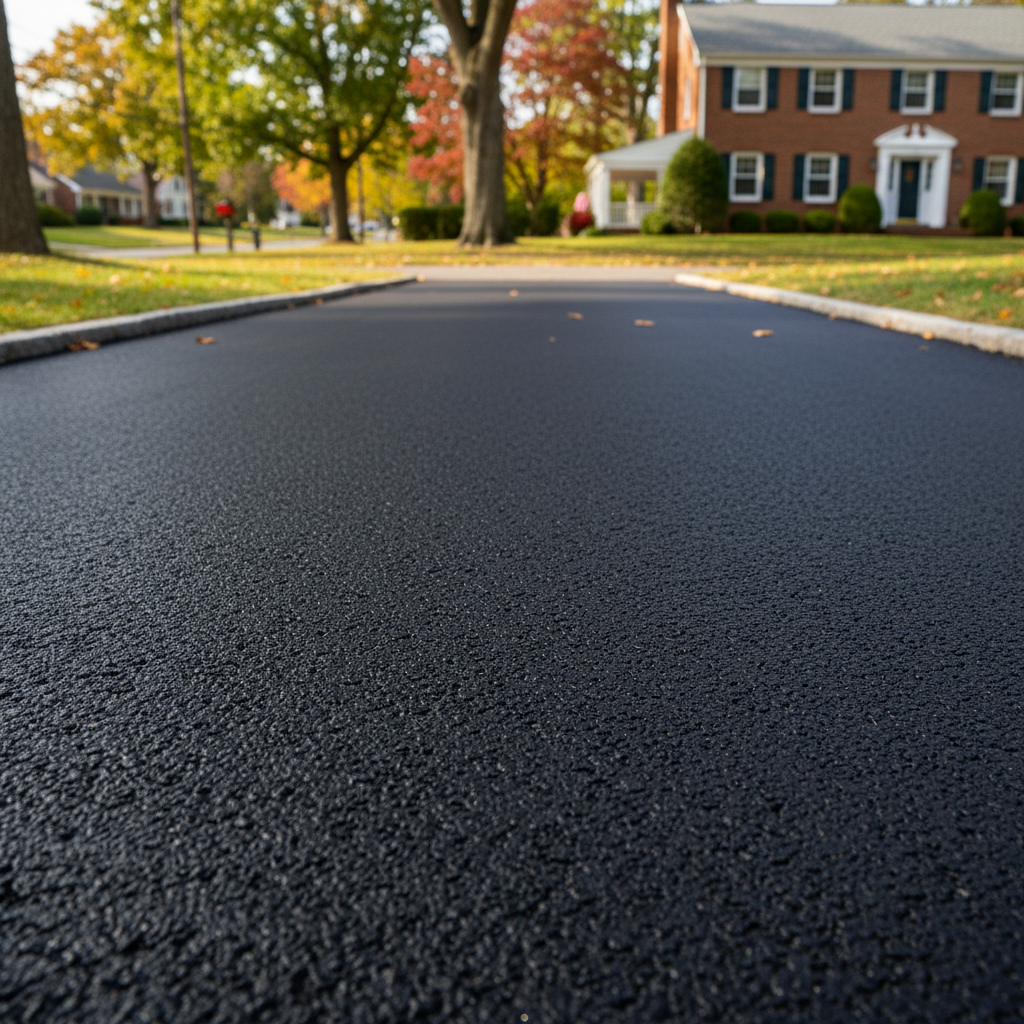
What's the difference between asphalt and concrete for a driveway?
This is probably the first question I hear when folks are trying to decide on a new driveway, and it's a really good one. You see concrete driveways all over, especially in older parts of Philly like Chestnut Hill or Society Hill. Then, you've got asphalt pretty much everywhere else. The big difference? It boils down to flexibility and how much upkeep they need. Asphalt is a petroleum-based product, which makes it more flexible. That's a huge plus with our crazy freeze-thaw cycles here in Pennsylvania, isn't it? When the ground shifts, asphalt tends to bend with it. This means it's less likely to crack than concrete. Concrete, on the other hand, is stiff. When it cracks, you usually get a pretty hard, straight line, and those cracks can be a real headache to fix correctly. Asphalt is also generally faster to put in and usually costs less upfront.
Now, the flip side: concrete can last longer if it's installed perfectly and maintained, but when it fails, it really fails. Asphalt needs regular sealcoating to shield it from the weather, and it can get a little soft on those really hot summer days. Concrete doesn't need sealcoating, but it stains more easily and is more vulnerable to salt damage in winter. For most residential driveways around here, especially with our clay soils, asphalt is a solid, practical choice.
How long should a new asphalt driveway last?
Alright, so you've shelled out the money for a new driveway. Naturally, you want to know how much time you're going to get out of it, right? A well-installed asphalt driveway, if you take care of it, should give you a good 15 to 20 years – sometimes even more. But that comes with a few big "ifs." First off, it has to be installed correctly. That means a good base, proper drainage, and the right thickness. Second, maintenance is absolutely key. You can't just pave it and forget about it. Regular sealcoating every 2-3 years is crucial. That protective layer keeps the asphalt safe from UV rays, water seeping in, and oil spills. If you skip the sealcoat, the asphalt will dry out, become brittle, and crack a lot sooner. Also, how you use it matters. If you're parking heavy trucks on it daily, or if you've got a bunch of trees dropping leaves and acorns that sit and decompose, that'll definitely shorten its life. But generally, if you treat it right, you're looking at a couple of decades of good service.
What's the deal with drainage? How important is it for my driveway?
Drainage isn't just important; it's absolutely critical. Seriously, it's probably the most overlooked part of a good paving job, but it's what truly makes or breaks a driveway's lifespan. Water is asphalt's worst enemy. If water sits on your driveway, it's going to soak into the asphalt, get down into the base layer, and start causing all sorts of trouble. In winter, that water freezes, expands, and then thaws – that's exactly how you get potholes and cracks. A good paving contractor, like us at Western Asphalt Company, will always pay close attention to your driveway's grade and slope. We want to make sure water runs off it quickly, either into a storm drain, a gravel bed, or away from your house and foundation. Sometimes that means putting in a catch basin or a trench drain. If your property has a natural low spot, or if your house sits at the bottom of a slope, we'll need to design a solution that actively moves water away. Don't let anyone pave your driveway without a solid drainage plan; you'll absolutely regret it later.
Can I really pave over an old concrete driveway with asphalt?
You can, but it's not always the best idea, and it comes with some pretty big caveats. We call this an asphalt overlay. The main perk is saving money because you don't have to rip out and haul away the old concrete. It can work if the existing concrete is in pretty decent shape – meaning, it's not severely cracked, heaved, or sinking in spots. If it's got a few hairline cracks, we can usually take care of those. But if the concrete is badly broken up, has major elevation changes, or is crumbling, then paving over it is just slapping a band-aid on a much bigger problem. Whatever issues are in the concrete underneath will eventually show through the new asphalt surface. We call this 'reflection cracking.' Plus, you're raising the finished height of your driveway, which can create issues with garage door clearances, sidewalks, and even your landscape beds. If you're thinking about this, we'd need to do a thorough inspection of your existing concrete to see if it's even a viable option. Often, ripping it out and starting fresh with a proper base is the smarter, longer-term solution.
How long after paving can I drive on my new asphalt driveway?
Patience is a virtue, especially with a fresh asphalt driveway. We usually tell homeowners to wait at least 2 to 3 days before driving on it. The asphalt needs time to cure and harden. It's not like concrete that cures to a rock-hard state; asphalt cures by losing its volatile oils and compacting under traffic. Driving on it too soon, especially with heavy vehicles, can cause ruts, tire marks, and indentations. In really hot weather, like those brutal Philly August days, you might even need to wait a little longer, maybe 4-5 days, because the asphalt stays softer for longer. And even after that initial waiting period, try to avoid turning your wheels sharply while stationary for the first few weeks, as that can scuff the surface. Also, be careful with heavy objects or anything with a sharp point, like bicycle kickstands or ladder feet, for the first month or so. It's a small inconvenience for a long-lasting, beautiful driveway.
What causes asphalt to crack, and how can I prevent it?
Cracks are inevitable with asphalt, but you can definitely slow them down. There are a few main culprits. First, as I mentioned, water is a big one. If water gets under your asphalt and into the base, especially with our winter freezes, it'll cause cracks and potholes. Proper drainage and regular sealcoating help prevent this. Second, UV rays from the sun are constantly drying out the asphalt binder, making it brittle. That's why you see older driveways turn gray and start to crack like crazy – the oils have evaporated. Sealcoating puts a protective layer over it. Third, heavy loads. If you've got a huge RV or a commercial truck regularly parking on a residential driveway not built for that weight, you're going to see cracks and ruts. Finally, the sub-base. If the ground underneath wasn't properly prepared or compacted, or if you've got unstable soil (common in some older Philly neighborhoods where fill was used), the asphalt will move and crack. To prevent it, make sure you've got a good contractor who does proper site prep, get it sealcoated regularly, and try not to abuse it with excessive weight. Small cracks should be filled promptly to prevent them from becoming bigger problems.
Can I put a basketball hoop or play area on my asphalt driveway?
Absolutely, you can, and a lot of families do! Just be mindful of a few things, especially in the first few months after your driveway is paved. For a portable basketball hoop, try to move it around occasionally, especially in hot weather. If it sits in one spot for too long, the weight of the base combined with the heat can cause an indentation in the asphalt. If you're looking to install a permanent hoop, like one that's anchored into the ground, you'll want to do that *before* the paving, or at least make sure the base for the hoop is separate from the driveway's base. You really don't want to dig into a brand new asphalt surface. For kids playing, it's generally fine. Just remind them not to drag heavy objects with sharp edges, as that can scuff or gouge the surface. Chalk is fine, and it washes off. Just avoid anything that could leave permanent stains like oil, grease, or certain types of paint. An asphalt driveway makes a great play surface, just use a little common sense to keep it looking good.